


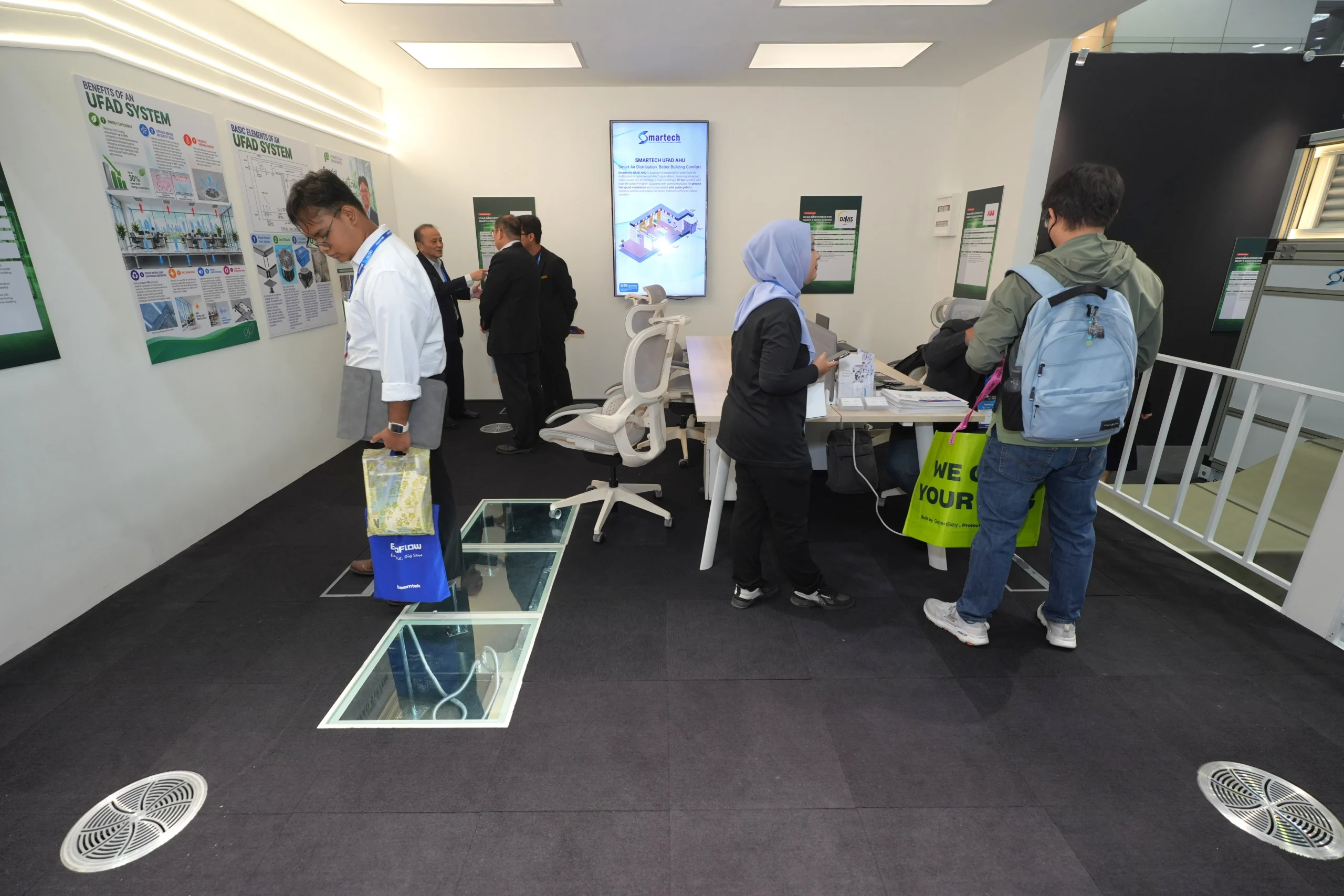
What happens when the raised floor becomes part of the cooling strategy? At ENGINEER MARVEX 2026, the HVAC Innovation for Smart & Green Buildings Live Showcase demonstrates how Underfloor Air Distribution (UFAD) can reduce ductwork, improve indoor environmental quality and create a more flexible approach to high-performance buildings.
For engineers, consultants and building owners, this live showcase offers the opportunity to step inside a working office environment and see how UFAD, smart controls, lighting and indoor air-quality monitoring operate together.
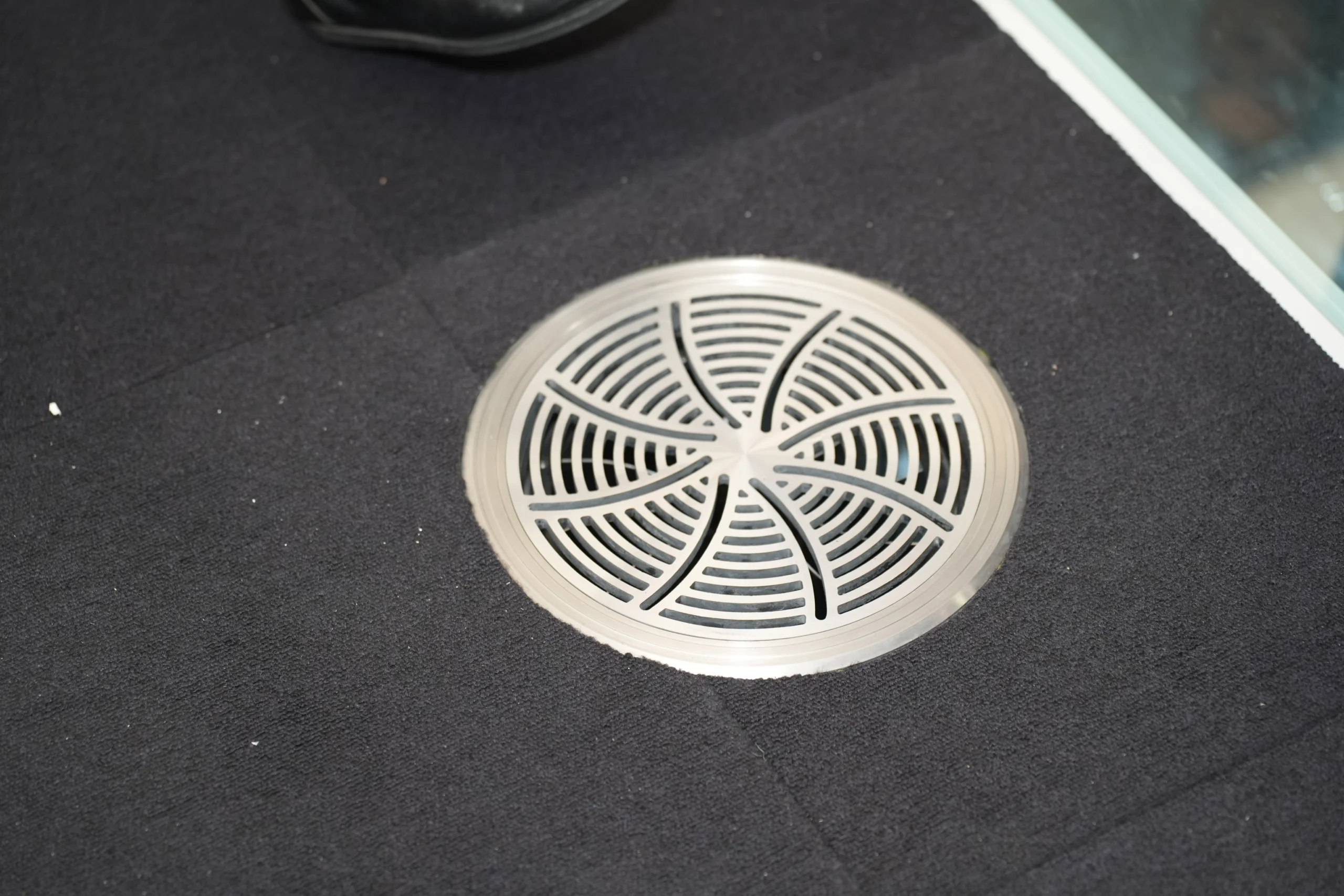
Unlike conventional systems that typically supply and return air overhead, UFAD uses the space beneath a raised floor as an air-distribution plenum. Conditioned air enters the occupied zone through specialised floor diffusers, then rises naturally with heat before returning at ceiling level. This one-directional airflow reduces unnecessary mixing and helps remove pollutants from the occupied space more effectively.
The approach is particularly relevant to Grade A offices, where raised floors are already used for flexible power and data cabling. Using the same infrastructure for cooling can reduce overhead ductwork and material use while allowing workstations and building services to be reconfigured more easily.
The showcase also traces how UFAD has evolved. When the system was applied at Malaysia’s Securities Commission building around 1999, the technology was relatively new and components had to be developed to meet specific engineering requirements. Early wired fan-assisted terminals subsequently evolved through remote-control designs to today’s wireless, BACnet-enabled units that can communicate with building automation systems and respond to IAQ sensors.
“The showcase demonstrates how you can design a sustainable, green and high-performance workplace,” said Ir. Au Chong Hun, Chief Consultant. “We are bringing the different elements together so visitors can see how they work as an integrated system.”
Visitors can see that integration first-hand through occupancy sensors, individually controlled lighting, demand-responsive cooling and IAQ monitoring connected to the BMS. The system can respond to changing occupancy and environmental conditions rather than simply monitor them.
For building owners, the implications extend to cost and sustainability. Where raised floors are already specified, UFAD can avoid conventional supply ducting and VAV boxes and, in some projects, deliver cost savings. The showcase also highlights potential HVAC energy savings of up to 30%, alongside reduced material use, better indoor air quality and greater workplace flexibility.