

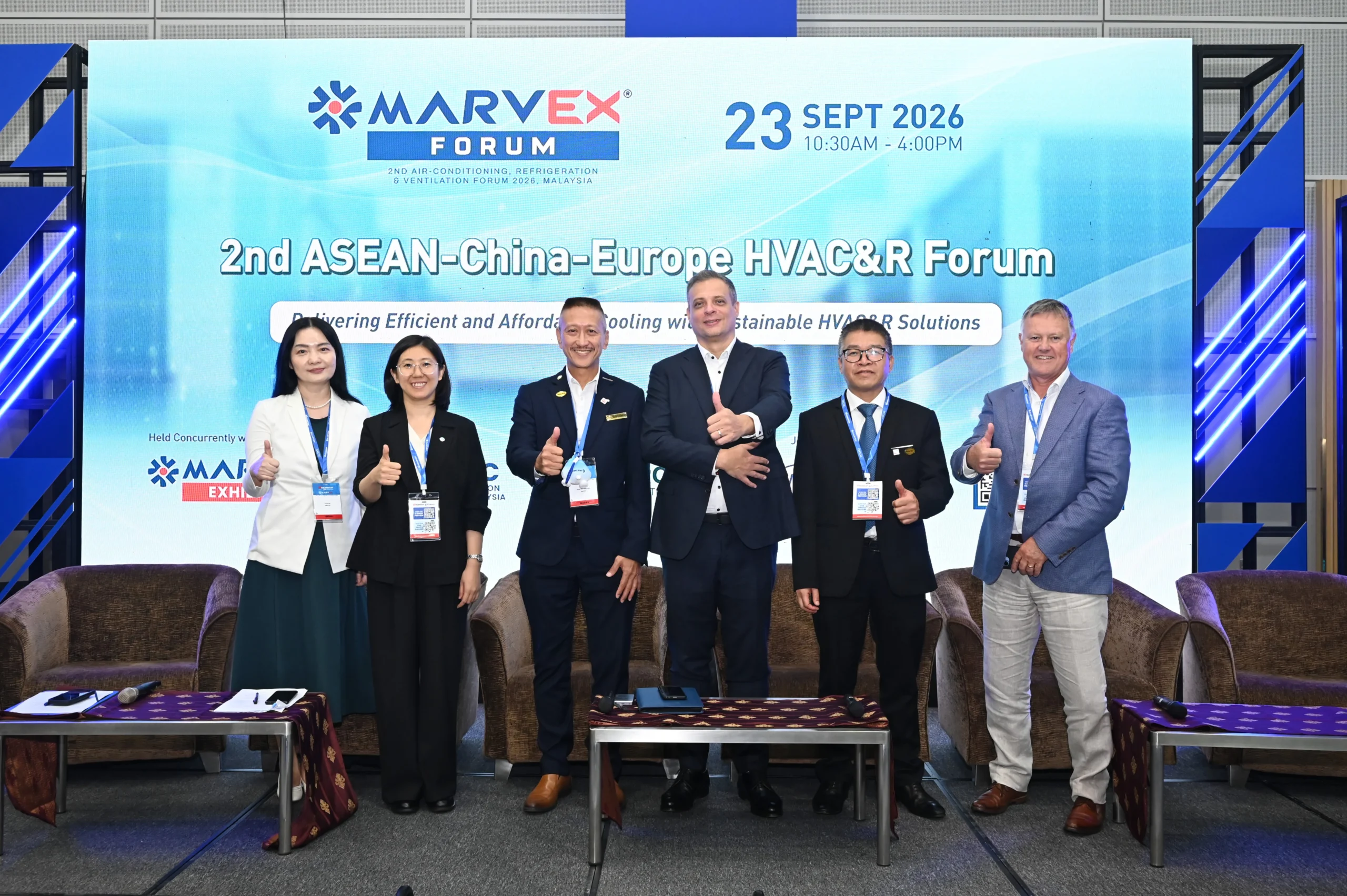
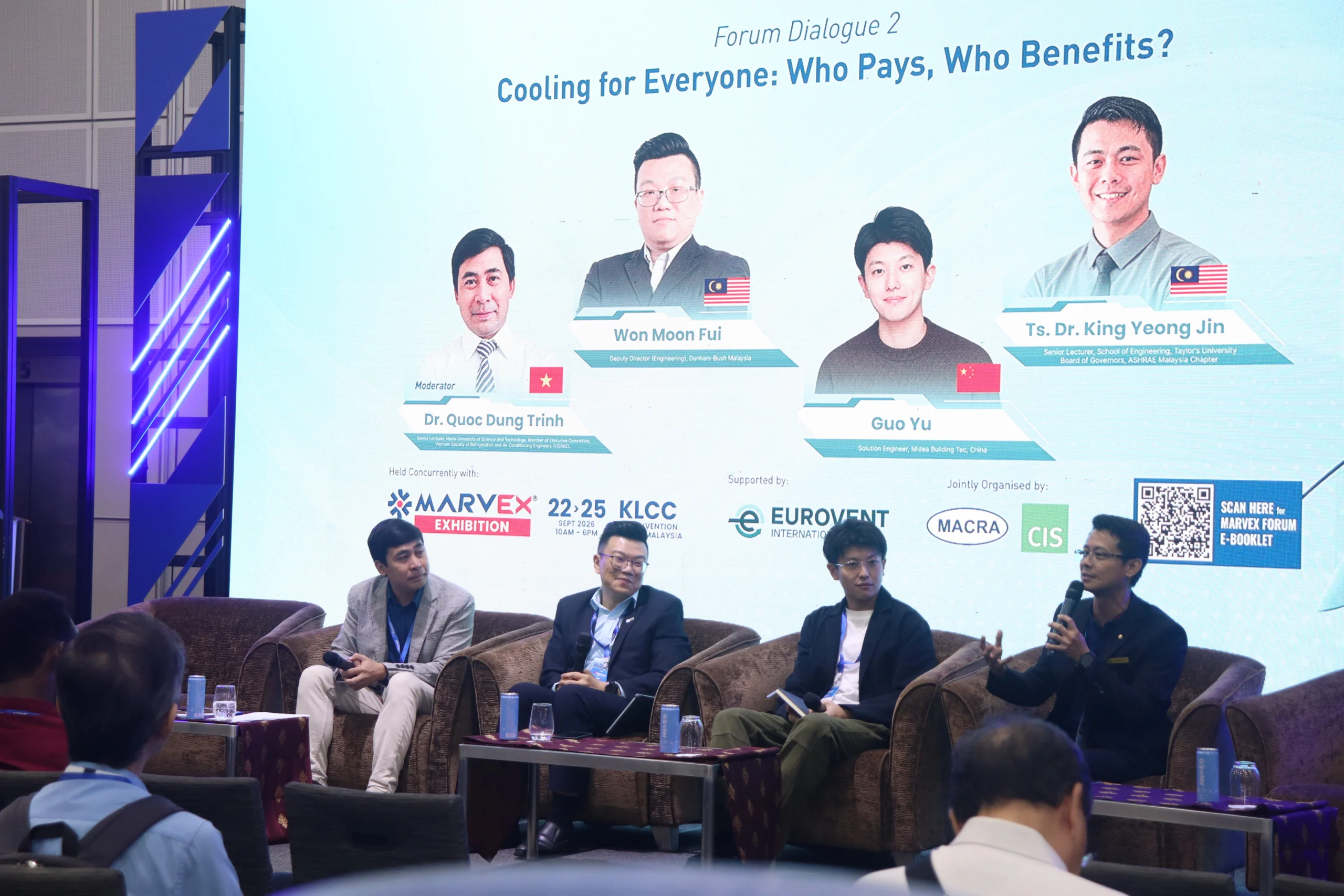
From Australia and the Middle East to Malaysia and Vietnam, MARVEX Forum 2026 brought regional and international perspectives into one room, giving the HVAC&R industry a wider view of how different markets are tackling the shared pressures of energy efficiency, affordability, regulation and sustainable cooling.
As cooling demand grows across ASEAN, the solutions cannot be viewed through a single market lens. At ENGINEER MARVEX 2026, the MARVEX Forum provided a regional platform for experts to compare approaches, challenge assumptions and examine how policy, standards, technology, financing and skills are shaping the industry across different markets.
Minimum Energy Performance Standards (MEPS) provided one key point of discussion. Mark Padwick, President of the Air-Conditioning and Refrigeration Equipment Manufacturers Association of Australia (AREMA), stressed the importance of consistency and policy certainty for manufacturers.
“The biggest challenge in making MEPS work in real markets is maintaining consistency between government policy, industry standards, and the certainty manufacturers need. Developing a product can take up to 10 years, so long-term clarity and alignment with international standards are critical,” he noted.
Markus Lattner, International Director, Eurovent Middle East raised the issue that, “Using energy more wisely is no longer optional for any country. Minimum energy performance standards deliver real socio-economic benefits across the market.”
He raised the economic implications of energy efficiency, stressing the importance of educating stakeholders and reducing energy bills for consumers, and the need to lower subsidy burdens for governments.
The conversation then shifted from standards to the practical barriers facing ASEAN. Won Moon Fui, Deputy Director of Dunham-Bush Malaysia, identified the industry’s focus on upfront cost rather than life-cycle cost as a barrier to adopting more efficient technologies. He also pointed to phased regulations, green loans, grants and incentives as mechanisms to make the transition more manageable.
“ENGINEER MARVEX provides a vital platform where industry experts can connect, share new technologies, and collaborate on better cooling solutions, helping drive sustainable, efficient cooling for everyone,” Won reinforced.
Guo Yu, Solution Engineer, Midea Building Technologies, identified financing as one of the key barriers to wider adoption of sustainable cooling, particularly for small and medium-sized projects where higher upfront costs can constrain investment.
“Financing is critical. Energy Management Contracting and Energy Performance Contracting can help projects manage the high upfront investment, while modularisation and local manufacturing can further reduce equipment, logistics and overall ownership costs.”
He also pointed to ASEAN’s hot and humid climate and growing data centre sector as factors driving demand for more specialised and cost-effective cooling solutions.
Dr. Quoc Dung Trinh of the Vietnam Society of Refrigeration and Air-Conditioning Engineers highlighted the challenge created by different standards, income levels and levels of awareness across ASEAN, as well as the need to better connect sustainability education with industry needs.
“Sustainability needs to be integrated into building design, vocational training and university education, with stronger collaboration between government, industry and educational institutions,” he stressed.
These perspectives demonstrate the value of a regional forum. The challenges may be shared, but the conditions are not. Bringing together experience from different markets allows delegates to see how neighbouring industries are approaching regulation, affordability, technology adoption, skills and implementation and what lessons can travel across borders.