

Building Management Systems (BMS) are moving beyond passive monitoring towards active, AI-driven optimisation, as the building automation industry looks to connect different systems and turn operational data into real-time energy savings.
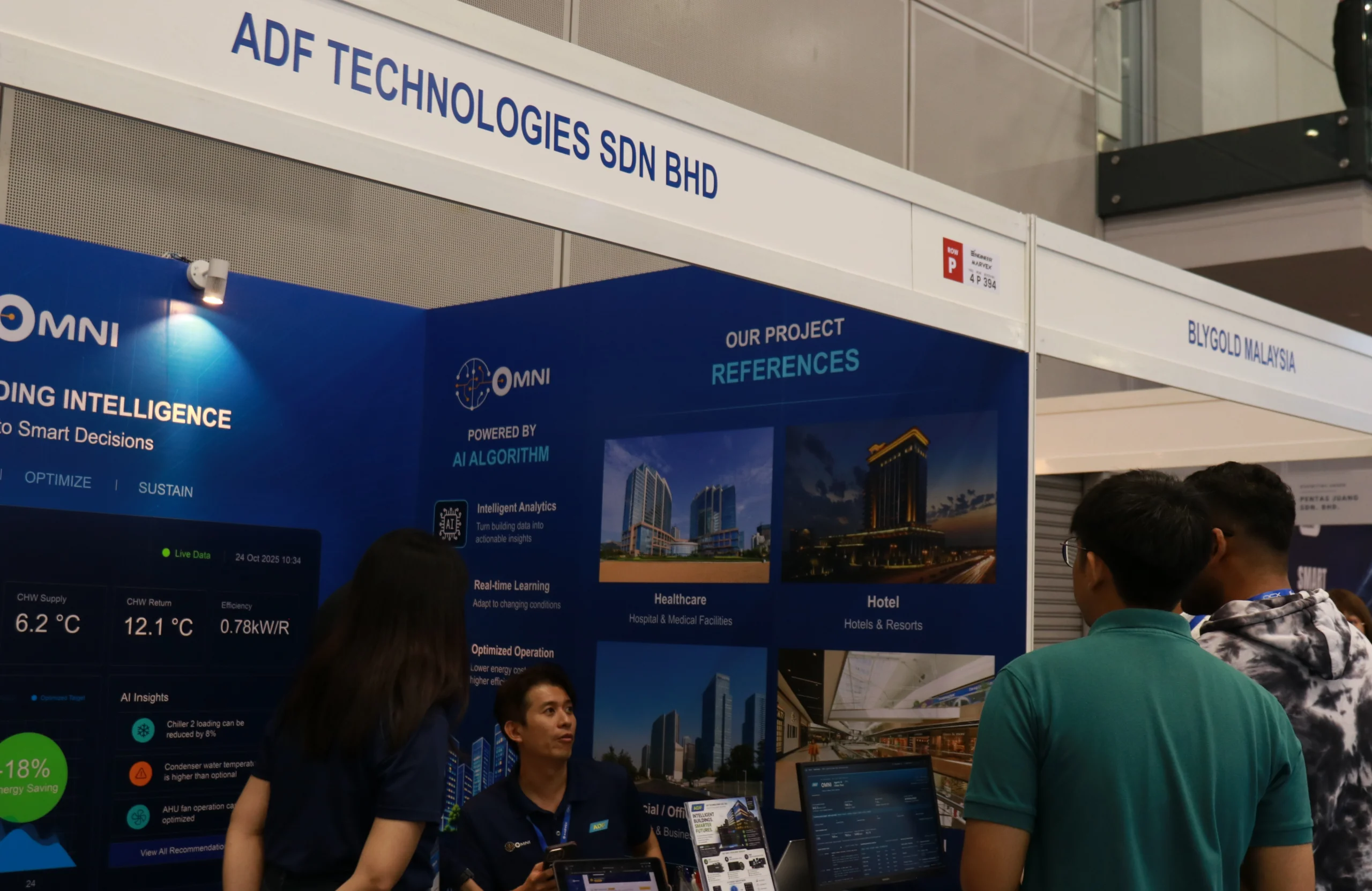
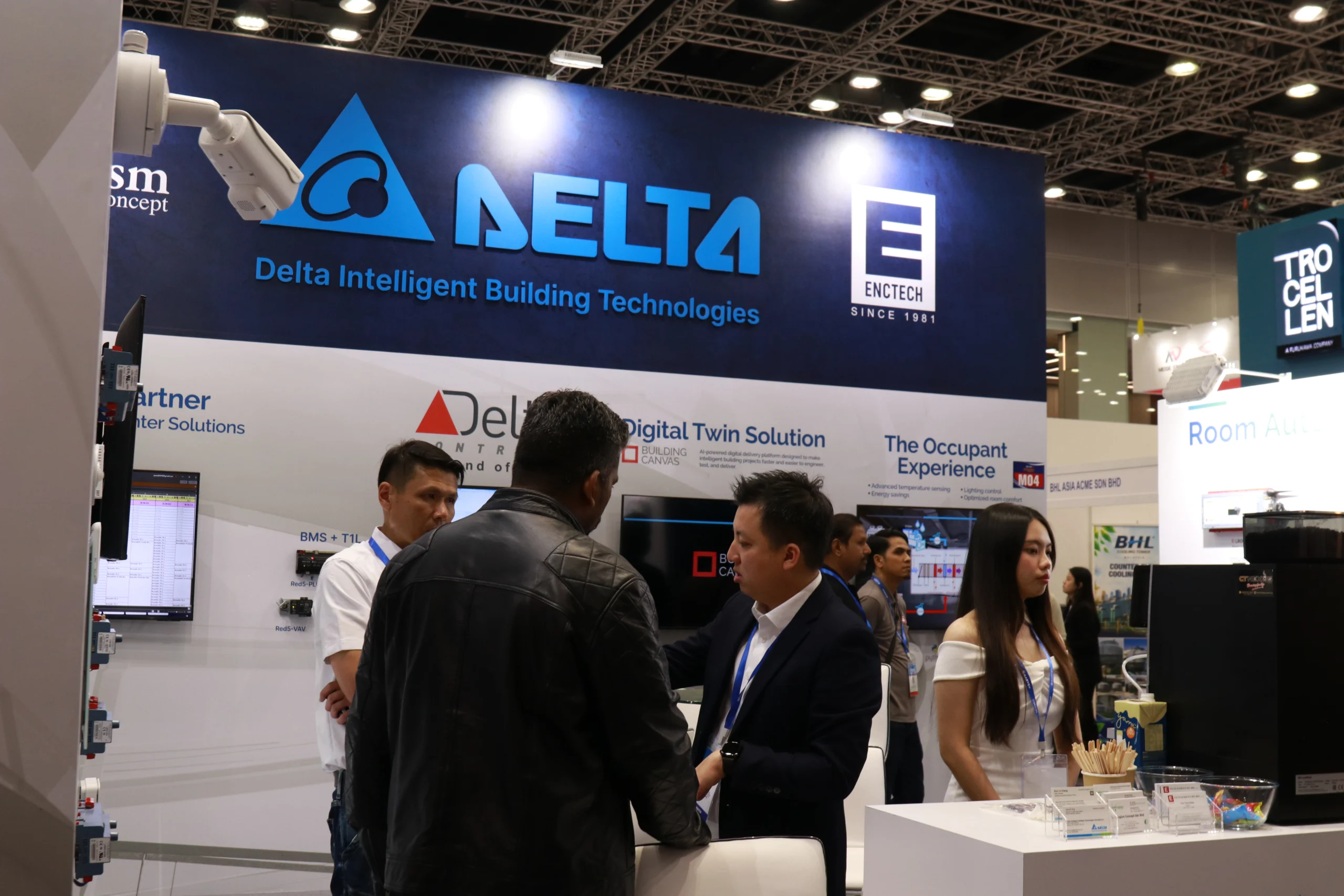
At MARVEX, ADF Technology and Delta Intelligent Building Technologies highlighted how AI is changing the way buildings are managed.
For ADF Technology, the focus is on agentic AI optimisation for chiller plants and air-conditioning systems.
“Previously, we did not use AI optimisation, instead our systems were based on fixed logical controls. So now we are using AI to move into operational optimisation based on AI decisions, and we are getting more data, making more informed decisions, and of course saving more energy,” said TH Yong, ADF Technology’s Director.
He added that the technology can collect data from building systems and use cloud-based models to detect faults and identify opportunities to enhance efficiency levels.
Meanwhile, at Delta Intelligent Building Technologies, AI is being integrated directly into edge controllers.
“With embedded AI, we don’t need a special or separate AI platform to run the AI solutions. This gives the user a peace of mind. When they get our controllers, we provide the full AI autonomous, autopilot control,” Jacob Sng, Director of Sales Asia Pacific, explained.
Delta is also using psychrometric analysis, combining temperature and humidity to optimise HVAC performance while maintaining comfort.
Both approaches point to a wider transformation in BMS. From systems that monitor individual building functions to integrated platforms that connect equipment, analyse data and actively optimise building performance.
As ADF Technology’s Yong explained, the next step is to take AI beyond individual systems, “We hope to bring it to the full building operations, and of course outside the building to the other sectors or services as well.”