

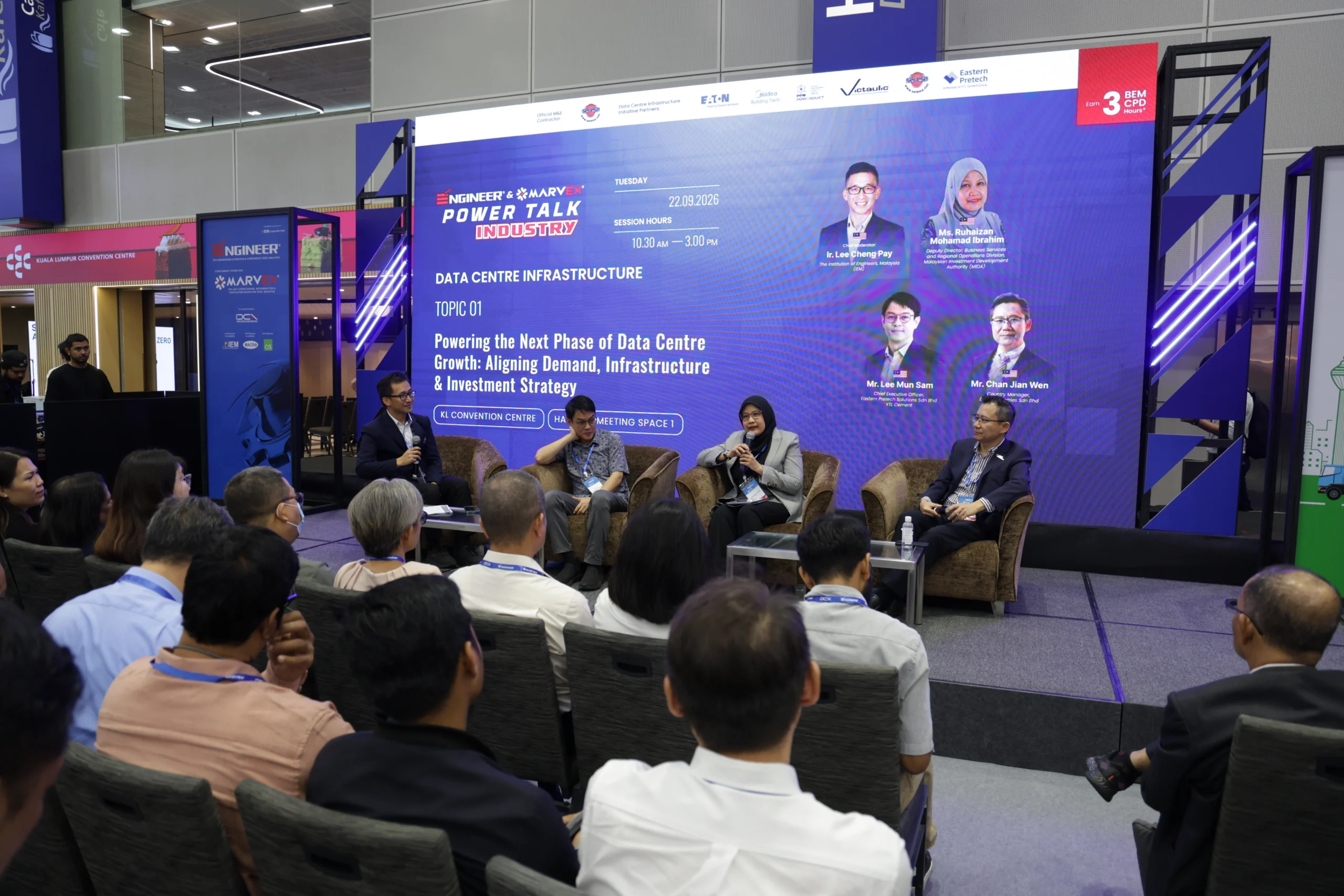
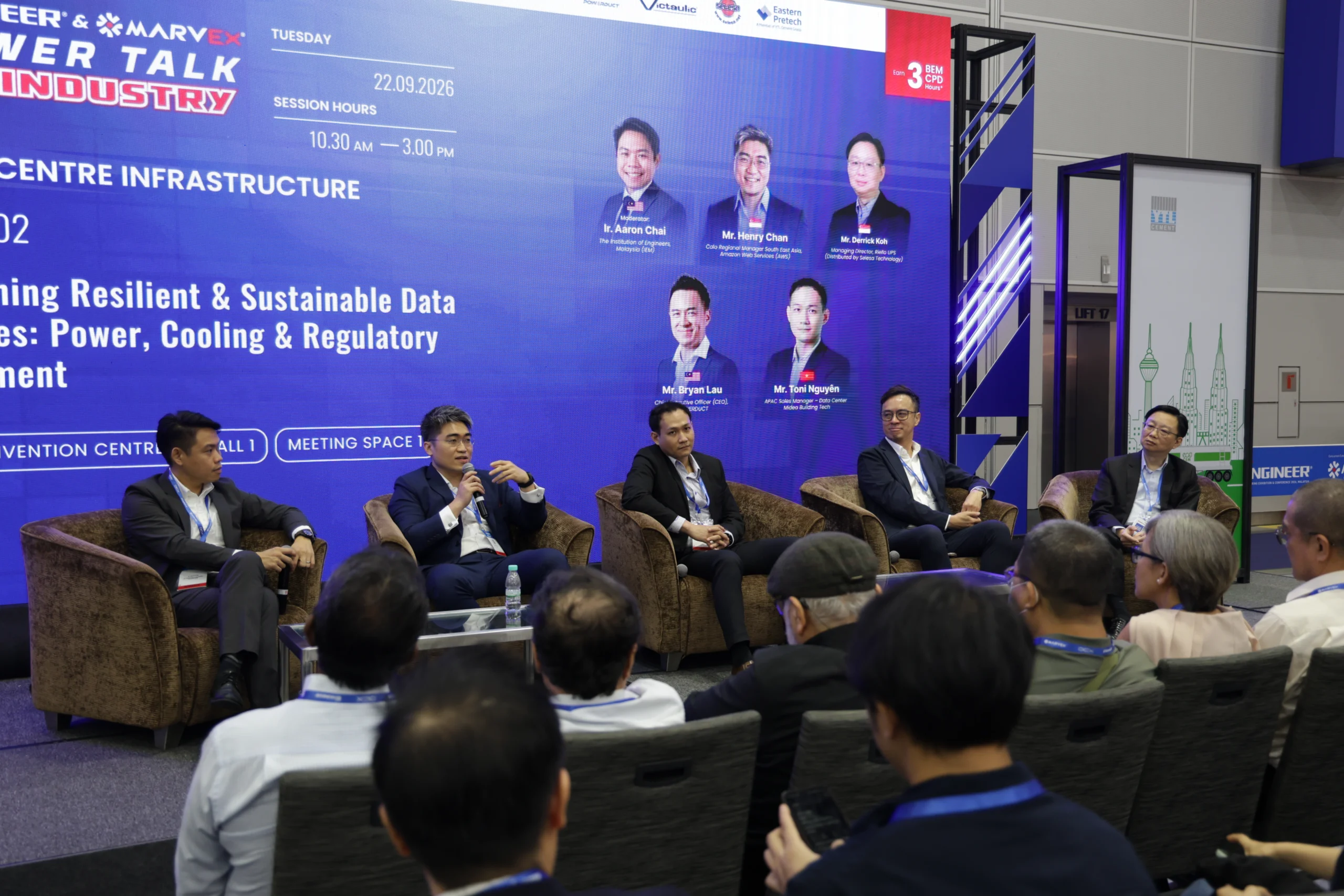
From investment strategy and infrastructure delivery to cooling, water and talent, Day One of the ENGINEER Power Talk: Industry explored the challenges behind Southeast Asia’s data centre expansion, setting the pace for three more days as the inaugural DCX Asia debuts alongside ENGINEER & MARVEX 2026.
As AI accelerates demand for computing capacity, the discussion made clear that the region’s data centre opportunity will depend on much more than investment.
“When assessing data centre investments, we look at sustainability, whether our resources will be used effectively and efficiently, and whether the benefits will remain in Malaysia. It is not just about the building, but also the services being offered from that data centre. Malaysians should be able to benefit from the infrastructure and computing capacity developed here,” opined Ruhaizan Mohamad Ibrahim, Deputy Director, Business Services and Regional Operations Division, MIDA.
Execution matters just as much. Lee Mun Sam, CEO, Eastern Pretech Solutions, stressed the importance of incorporating construction strategies such as precast from the very beginning.
“When precast is not incorporated from the start, there will be more ad hoc work. That means lost time, lost opportunities and, ultimately, higher costs. If you do not get it right at the inception stage, things are bound to fail.”
As facilities become more complex, collaboration across the supply chain is also critical. Henry Chan, Colo Regional Manager, South East Asia, AWS Singapore said, “One of the biggest challenges is creating greater synergy between partners. Technical partnerships are critical because different teams need to come together, share the right knowledge and work in parallel even before a demand signal comes in.”
On sustainable cooling, Toni Nguyen, APAC Sales Manager for Data Centre, Midea Building Tech, highlighted that “Reusing wastewater is part of the plan, but making it viable will require collaboration across the supply chain.
He explained that the wastewater must first be properly treated to ensure that its quality meets the requirements for use within a data centre.
Talent emerged as another critical constraint. “We do not have enough mechanical, electrical, civil and structural engineers. The data centre market is expanding in Malaysia, but the number of engineering graduates is limited while many experienced engineers are approaching retirement,” Aaron Chai of The Institution of Engineers, Malaysia (IEM) pointed out.
For Habibi Razak, Regional Director Energy for Indonesia & South East Asia, Surbana Jurong Group Indonesia, that skills challenge is regional.
“Data centre infrastructure is expanding rapidly, but we still lack specialised resources. Engineers across ASEAN must strengthen their competencies in areas such as liquid cooling, IT racking and data centre modularisation.”
The parameters are changing just as quickly. Tan Kok Yee, Associate Director, Red Engineering Tractebel (Malaysia), reflected that two or three years ago, the industry was still discussing rack densities of around 20 kilowatts.
“However, today, individual racks can exceed 200 kilowatts, and that figure will continue to increase. Previously, data halls could rely mainly on air cooling, but rising rack densities mean that liquid cooling must now be incorporated into the design.”
Day One set a clear agenda. Data centre growth now demands parallel progress in policy, infrastructure, resource efficiency, technology, supply chains and talent. With DCX Asia making its debut, ENGINEER & MARVEX provides the industry with three more days to continue those conversations and connect them directly with the technologies and expertise required to deliver the region’s next phase of growth.